KCAA ATO No. 22 — Wilson Airport, Nairobi

Flight Simulator
Training Devices (FSTD)

East Africa's most advanced FSTD fleet — three certified devices built to EASA, ICAO, and KCAA standards, delivering the aerodynamic fidelity and avionics realism that serious pilot training demands.

EASA FTD Level 2
Dornier 228-212
Full Motion · 6-DOF Electric
EASA FTD-2
Cessna 208B Caravan
Fixed Base · G1000 NXi
EASA FNPT Level II
Cessna 172S Skyhawk
Fixed Base · G1000 Nav III
01
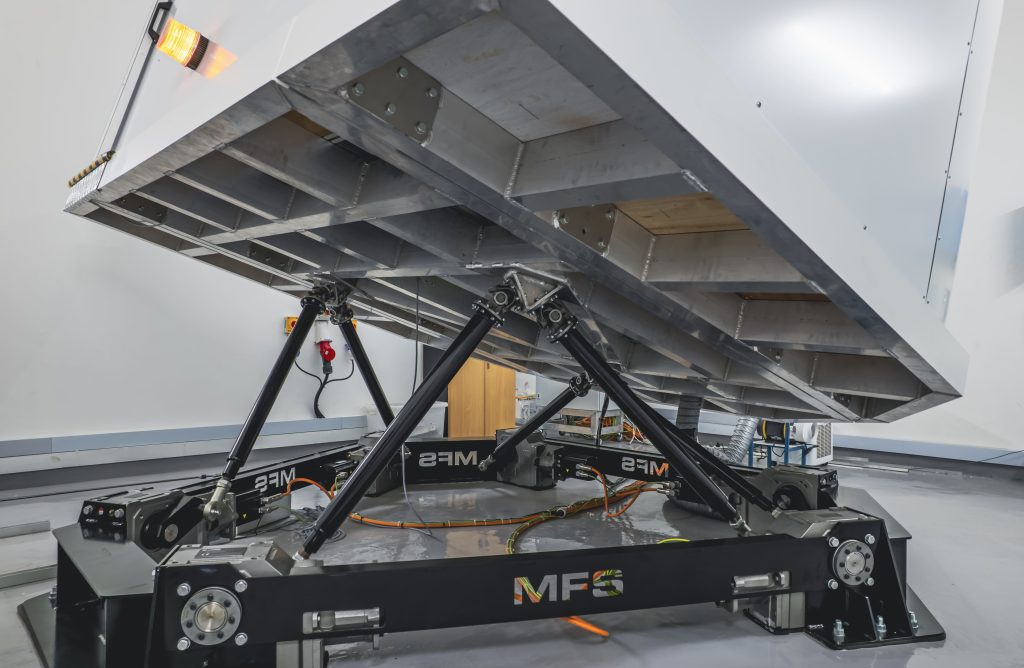
Dornier 228-212 Full Motion Flight Simulator — Think Aviation, Wilson Airport
Dornier 228-212
Full Motion FSTD
EASA FTD Level 2
EASA FTD Lvl 2 KCAA Approved ICAO Doc 9625
Simulator 01 / 03
Dornier 228-212
Full Motion · Garrett TPE-331 Twin Turboprop
6-DOFMotion Platform
240°UHD Visuals
3×UHDProjectors
GTN 750Touch NAV
NTSModelled
STOLOps Rated

The flagship of the fleet. This EASA FTD Level 2 device features a high-dynamic 6-DOF electric motion system delivering authentic vestibular cues essential for mastering the asymmetric handling of the TPE-331-5 direct-drive turboprop. A hybrid cockpit — Garmin GTN 750/650 plus conventional electromechanical instruments — enables simultaneous PBN/RNP and raw-data scanning on one device.
Garmin GTN 750 (Touch) Garmin GTN 650 (NAV/COM) Conventional Electromechanical Layout TCAS II Traffic System Jeppesen African Database TAWS / EGPWS Terrain Warning NTS High-Fidelity Model Start Lock Logic EIS — ITT / Torque / RPM Gauges
Interactive Sim Control Deck
Real-time HUD
145
IAS (KT)
5,500
ALT (FT)
+450
V/S (FPM)
82%
TORQUE
Simulated Weather Environment
Inject Airborne System Failure
Motion6-DOF Electric Motion
Visual FOV240° × 40° FOV
Projector Rig3× UHD Laser Projection
Database ImageryGoogle & Bing Ortho Maps
Weather ModelVolumetric Clouds + Icing
Emergency GearGravity Free-Fall Handcrank
  • DO228 Type Rating & Differences
  • Multi-Crew Cooperation (MCC) Certification
  • Operator Proficiency Checks (OPC) & LPCs
  • Renewals & Multi-Engine Instrument Ratings (IR)
  • Advanced Precision Approaches (ILS CAT I, VOR, NDB, RNP)
  • Complex SIDs, STARs & Holding Entry Procedures
  • Negative Torque Sensing (NTS) Failure Management
  • Abnormal Hot, Hung, & Ground Starts
  • STOL Landings on Unpaved, High-Altitude Airstrips
  • Asymmetric Thrust Control / Minimum Control Speeds (Vmca/Vmcg)
  • Upset Prevention & Recovery Training (UPRT)
  • VFR Night Tactical Missions
Instructor + full-motion sim time per hour · Min. 1 hr session Book DO228 →
02
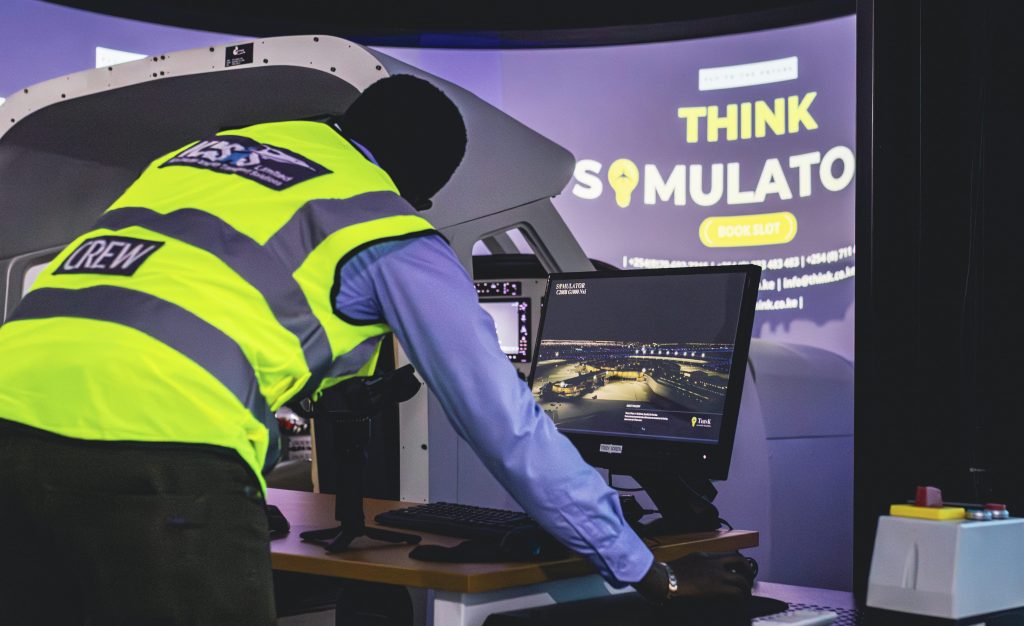
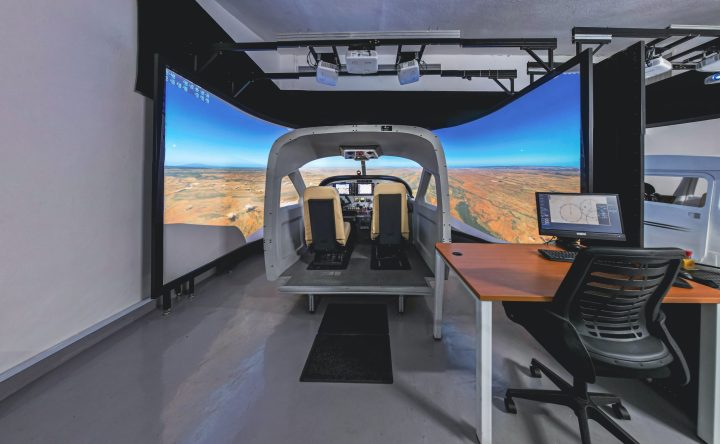
Cessna 208B Grand Caravan EX G1000 NXi Flight Simulator — Think Aviation, Nairobi
Cessna 208B
Grand Caravan EX
EASA FTD-2
EASA FTD-2 KCAA Approved SET Class Rating
Simulator 02 / 03
Cessna 208B EX
Fixed Base · Pratt & Whitney PT6A Turboprop
FTD-2Certification
G1000NXi Suite
240°Visual Field
PT6APowerplant Model
SVTSynthetic Vision
SETClass Ready

Designed specifically for turboprop transitional crew training. This high-fidelity EASA FTD-2 representative simulator mirrors the single-engine workhorse of African bush aviation. Outfitted with dual physical G1000 NXi bezel displays, authentic engine controls, and an integrated GCU 475 keypad, pilots gain unmatched muscle memory before climbing into the actual cockpit.
Garmin G1000 NXi Dual Deck Physical GFC 700 Autopilot Panel GCU 475 Flight Management Controller Fully Functional Backup Gauges PT6A Turbine Dynamics Simulation Cargo Pod Aerodynamic Drag Profiles TCAS & ADS-B Inbound Traffic Visuals Configurable Propeller Feathering Hot / Hung Start Sequences
Interactive Sim Control Deck
Real-time HUD
118
IAS (KT)
7,000
ALT (FT)
-150
V/S (FPM)
74%
TORQUE
Simulated Weather Environment
Inject Airborne System Failure
Motion SystemFixed Base Performance
Visual Canvas240° × 40° FOV
Control Loading3-Axis CLS Active
FMS HardwareGarmin GCU 475 Keypad
Airport SceneryGoogle / Bing Ortho Maps
Dynamic LoadingSimulated Weight Shifts
  • C208B Class Rating & Differences Training
  • Glass Cockpit (G1000 NXi) Flight Transitions
  • Instrument Flight Procedures & RNAV/GNSS Holds
  • Bush Strip Landing & Reverse-Beta Pitch Workouts
  • PT6A Engine Flameout Recovery & Forced Landings
  • System Management under Volumetric Heavy Icing
  • Single Engine Turboprop (SET) Class Training
100%IR Procedural
Flying Credit
OPCProficiency
Check Valid
SETClass Rating
Supported
Excellent resource for regional bush pilot preparations Book C208B →
03
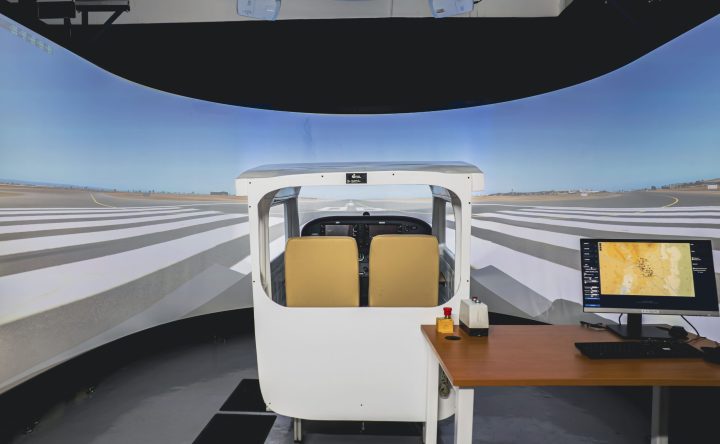
Cessna 172S Nav III G1000 Flight Simulator — Think Aviation, Wilson Airport
Cessna 172S
Skyhawk Nav III
EASA FNPT Level II
EASA FNPT II KCAA Approved PBN Standard
Simulator 03 / 03
Cessna 172S Skyhawk
Fixed Base · Lycoming IO-360 Piston Engine
FNPT IICertification
G1000Nav III Deck
240°Visual Field
IO-360Engine Dynamics
GFC 700Physical Autopilot
PBNIR Approved

The ultimate platform for instrument rating, procedural training, and ab-initio glass cockpit adaptation. This EASA FNPT Level II device accurately simulates the world's most trusted training aircraft. Featuring dynamic control loading and high-fidelity aerodynamic feedback, pilots can Master navigation patterns, PBN, and single-engine instrument approaches efficiently.

Garmin G1000 Nav III Layout GDU 1040 PFD + MFD Panels Physical GFC 700 Flight Director Panel Lycoming Piston Engine Sound System Integrated SafeTaxi & Airport Charts Flap Drag & Propwash Slipstream Force Full COM/NAV Flight Procedures Standby Backup Instruments Jeppesen African Database
Interactive Sim Control Deck
Real-time HUD
95
IAS (KT)
6,200
ALT (FT)
+200
V/S (FPM)
2400
RPM
Simulated Weather Environment
Inject Airborne System Failure
Motion SystemFixed Base Navigation
Visual Canvas240° × 40° FOV
Force FeelActive Dynamic CLS
Database RigEASA Certified Navigation DB
Weather ProfilesCrosswind & Turbulence
Night OpsRealistic City Rendering
  • PBN & Competency-Based Instrument Ratings (CB-IR)
  • Basic Instrument Flight Instruction (Ab-Initio Stage)
  • Emergency Engine Fire & Forced-Landing Procedures
  • Glass Cockpit Garmin G1000 Systems Integration
  • Cross-Country Navigation Training & Holding Exercises
  • PPL-A & CPL-A Module Credit Accumulations
  • Flight Instructor (FI) Instrument Qualification
35–40hIR Credit
SE-IR License
25hCPL Credit
Integrated Path
5hFI Credit
Instrument Rating
Perfect for Single Engine Instrument Rating (SE-IR) build-ups Book C172 →
Syllabus Track Guide

Syllabus & Training Tracks

Explore structured simulator curriculums designed to optimize synthetic hours conversion.

01
Private Pilot Licence (PPL)
Device: C172SMax Credit: 5 Hours

Ab-initio students utilize our Cessna 172 FNPT II to master radio navigation, basic attitude flight patterns, cross-country planning, and standard airport traffic pattern flows before single-engine aircraft releases.

02
Instrument Rating (SE-IR)
Device: C172SMax Credit: 35–40 Hours

Approved under EASA and KCAA regulations. Covers holding patterns, DME arcs, system malfunctions, and advanced PBN procedures. Significantly reduces actual flight hourly costs while maintaining safety.

03
Single Engine Turboprop (SET)
Device: C208BCheck Valid: OPC / LST

Tailored class rating for bush-flying operators. Learn PT6A turbine start logs, propeller pitch beta control, volumetric structural icing risks, and tactical emergency glides on unpaved African landing strips.

04
Multi-Crew Cooperation (MCC)
Device: DO228Hours: 20 Hours

Develop critical crew resource management (CRM) workflows inside our high-fidelity twin-engine Dornier 228 deck. Recreates dense airline environments, checklist coordination, and asymmetric engine-out procedures.

Credit Framework

Approved Regulatory Credit Matrix

Maximum synthetic training hours allowable toward license issues under KCAA ATO guidelines.

Training CourseRequired Flight HoursFNPT II Max Credit (C172S)FTD Level 2 / FTD-2 Max CreditApproved Syllabus Focus
PPL (A) Course45 Hours5 HoursInstrument flight, basic navigation, procedural flows, recoveries.
CPL (A) Modular150 Hours5 Hours10 HoursAdvanced flight profiles, cross-country prep, night transitions.
CPL (A) Integrated150 Hours25 Hours40 HoursComplete multi-engine, PBN, and systems procedural mastery.
Instrument Rating (IR)40 Hours35 Hours40 HoursHolding patterns, precision ILS approach, missed go-around logs.
Multi-Crew Co-op (MCC)20 Hours20 HoursMulti-crew checklist coordination, abnormal systems flows, CRM.
Impact & Innovation

Beyond Standard Training

Discover how we utilize our state-of-the-art simulators to empower local communities, inspire future aviators, and advance regional aviation engineering.

Giving Back to Society

Community Outreach & Scholarships

Think Aviation is committed to nurturing the dreams of underrepresented youth. Through our annual *Aviation Horizons* initiative, we sponsor simulator scholarships for passionate students from local schools, offering them professional flight training exposure at zero cost. We actively host charity groups, raising awareness of high-tech aviation career paths and making the sky accessible to all.

STEM Junior Flight Camp

Inspiring The Next Generation

Through our specialized Junior Captain programs, kids aged 8 to 16 step into our Cessna 172S glass cockpits. Guided by certified instructors, kids grasp complex concepts like gravity, aerodynamics, global weather systems, and mechanics in a safe, thrilling environment. These interactive STEM camps foster analytical thinking, spatial orientation, and self-confidence, turning screen time into a lifetime love for flight.

Simulator & Avionics Engineering

R&D and Practical Systems Integration

Our FSTDs double as a robust sandbox for aircraft engineering, instrumentation, and maintenance. Students and engineers get under the hood to study flight model tuning, control loading calibration, and avionics bus signal mapping. It serves as an active research asset for software and hardware engineering, allowing technical minds to prototype telemetry software and troubleshoot avionics logical loops safely on the ground.

Training Routes

East African Tactical Route Library

Standard regional training runs simulated with high-fidelity topography and localized turbulence layers.

Wilson (HKNW) to Masai Mara (HK05) 1.2 Hrs Sim

This route tests transitional skills under complex terrain. Climb over the Ngong Hills, navigate severe mechanical thermal currents over the Rift Valley, and execute visual bush landings on unpaved sand strips.

Cruising LevelFL095 VFR
Target ChallengeMountain Winds
Arrival StripHK05 Gravel Runway
Recommended SimC208B / DO228
Mombasa (HKMO) to Nairobi (HKJK) 1.5 Hrs Sim

Master airways navigation and high-density airport terminal areas. Recreates continuous regional radar controller communication, IFR vectoring, standard arrivals (STARs), and final precision ILS CAT I approaches.

Cruising LevelFL100 / FL120 IFR
Target ChallengeDense ATC & IFR
Arrival RunwayRWY 06 / 24 HKJK
Recommended SimDO228 / C208B
Wilson (HKNW) Local IR Patterns 1.0 Hrs Sim

Perfect for instrument currency checks. Pilots practice entry holds over the NV VOR, execute continuous non-precision approaches, transition to missed-approaches, and master crosswind operations on Wilson runway 14/32.

Cruising Level6,500 - 8,500ft
Target ChallengeHolding & Arcs
Arrival RunwayRWY 14 / 32 HKNW
Recommended SimC172S / C208B
Fleet-Wide Technology

Common Platform. Uncompromised Fidelity.

Every FSTD shares these core system capabilities — engineered for East Africa, validated to global standards.

Jeppesen African DB
Latest regional database with precise airport elevations, taxiways, ramps, local navaids, waypoints, and 3D hangar modelling across East Africa.
Google / Bing Ortho
Photorealistic satellite imagery providing real-world terrain, landmark recognition, and visual approach references across the region.
Volumetric Weather
Real-time injection of volumetric clouds, precipitation, structural and engine icing, turbulence, and regional weather phenomena.
Instructor Station (IOS)
Full instructor command centre — instant failure injection, aircraft positioning, fuel state control, and 3D approach path replay for debriefs.
TCAS Simulation
Full Traffic and Resolution Advisory generation, plus realistic 3D AI airport traffic for enhanced situational awareness training.
Realistic Control Loading
Electrical and hydraulic force feedback on yoke, rudder, and trim — forces vary with airspeed, configuration, and aerodynamic load.
240° Wrap-Around Visual
Three UHD projectors delivering 240° × 40° immersive visuals with superior peripheral cues for circuits, visual approaches, and base-to-final turns.
Cockpit Audio Fidelity
Authentic cockpit soundscapes — engine start sequences, wind, warnings, and system sounds all synced to simulation state.
Sample Training Mission

IFR Diversion with
Engine Flameout

The crew departs HKMO en route to HKJK at FL100 on an IFR flight plan. Before reaching Nairobi, ATC advises the ILS is unserviceable — crew proceed for the NV VOR DME approach Runway 06. Maintaining MDA at the MAP, deteriorating weather forces a go-around.

Crew execute the missed approach and divert toward an alternate — Orly (HKIK), Magadi (HKMG), or Kilimanjaro (HTKJ) — complicated by low fuel state. En route, the engine flames out just before top-of-descent. The crew must manage throttle cut, ignition timing, and NTS response, then handle a failed relight. Full emergency procedures and crew decision-making are assessed throughout the exercise.

Simulator Runway Scenery
IFR TRAINING — WILSON AIRPORT
DepartureHKMO (Mombasa)
DestinationHKJK (Jomo Kenyatta Intl)
LevelFL100 / FL120 @ 0900Z
ApproachNV VOR DME RWY 06 HKJK
AlternatesHKIK · HKMG · HTKJ
EmergencyEngine Flameout — Failed Relight
Suitable ForDO228 FTD / C208B FTD-2
Reservation Portal

Secure Your Simulator Slots

Fill out the detailed routing data below to instantly package your briefing parameters and send them directly to our Operations desk.

Ready to Fly?

Reserve Your Simulator Session

New clients complete our Simulator Usage and Handling Training Course before first flight. All sessions are instructor-led with tailored exercises. Advance booking ensures availability and allows us to prepare your specific training scenario.


Minimum 1 hour per session Instructor included Wilson Airport, Nairobi simulators@think.co.ke
Lightbox Visual
Visual Title
Visual Description